What is SAP TRM?
Ask ten treasury teams what “SAP Treasury” is, and you might get ten different answers. Some think of bank connectivity and payments. Others think of cash positioning and forecasting. When we talk about SAP Treasury and Risk Management, usually shortened to SAP TRM, we mean something more specific: the part of SAP S/4HANA that manages a company’s financial transactions and the risks that come with them.
SAP TRM is not a new product. SAP’s treasury functionality dates back to the early 1990s, and it has been running the treasury operations of large corporations ever since. That’s worth noting in a market where treasury platforms have changed hands and direction over the years. Few treasury solutions have that kind of track record.
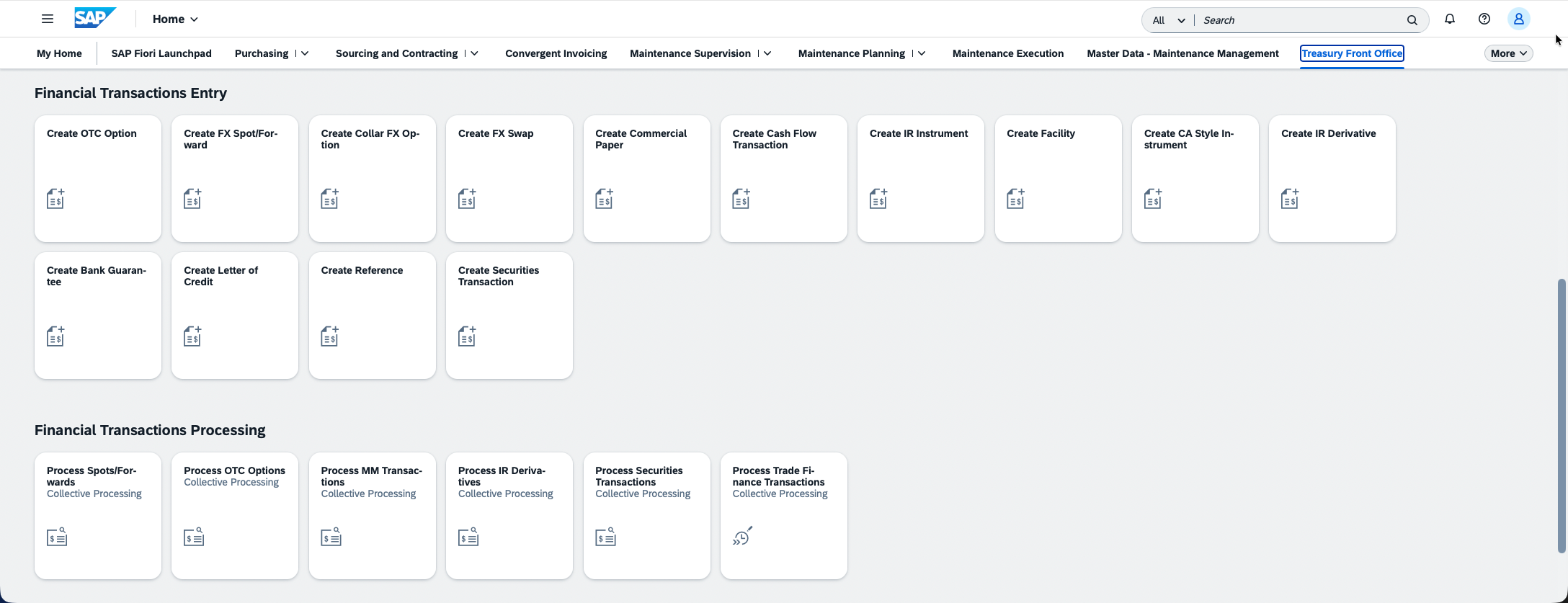
Mature doesn’t mean dated, though. With SAP S/4HANA, TRM has a revamped SAP Fiori interface that offers a much better user experience than many people remember from earlier versions of SAP Treasury. Deals can be entered, approved and monitored through Fiori apps, and reports that once meant running a transaction code and exporting to Excel are now available as interactive apps.
SAP also continues to develop the functionality. New capabilities, such as trading platform integration for FX deals, hedge management and accounting, and new Fiori apps, are delivered with S/4HANA releases as treasury requirements change. Interest rate benchmark reform, new hedge accounting standards and growing expectations for real-time visibility have all shaped how TRM works today, and it will keep evolving as the treasury environment does.
This first post in our series explains what TRM is and how it operates. Later posts will go deeper into how the system is used day to day and the reporting it provides.
What SAP TRM does
Think of SAP TRM as the place where your treasury deals live. Loans, investments, FX trades and derivatives are held in one system, from the day your team enters a deal to the day it matures.
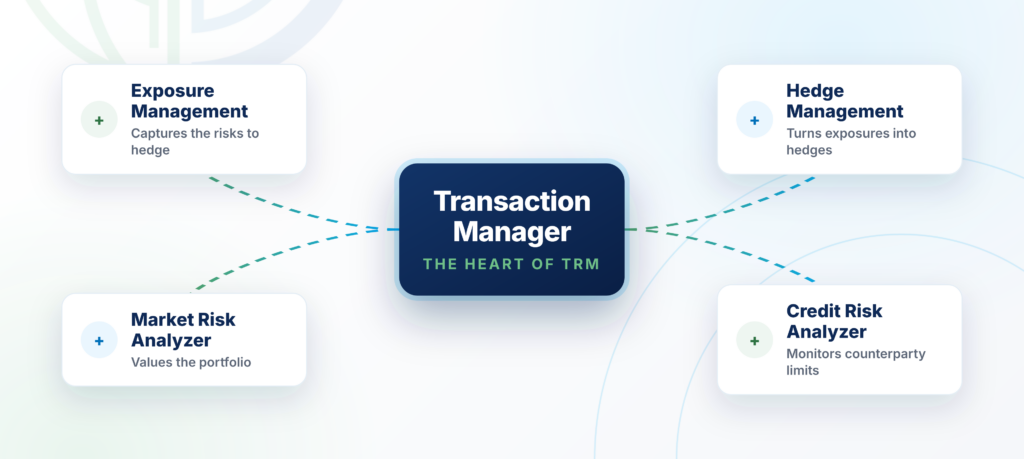
At the center is Transaction Manager, which holds your financial contracts and carries them through their full lifecycle. Your team enters trades manually, or a trading platform feeds them in. From there, TRM handles:
- Deal capture and approval, with segregation of duties between the person who enters a deal and the person who approves it
- Settlement and confirmation of trades with counterparties
- Cash flows and payments for interest, principal and settlement amounts
- Month-end Processing, including interest accruals, mark-to-market valuations and reclassifying debt from long-term to short term
- Accounting, posting each step of the deal to the general ledger
Everyone in treasury is familiar with a popular alternative: deals tracked in Excel, accounting entries keyed in by hand, and hours spent at month-end making sure everything lines up. Keeping separate records in sync is a lot of work, and it gets harder as transaction volumes grow.
TRM replaces that with a single record. Enter the deal once, and the cash flows, accounting, payments and reporting all come from that same transaction.
Built into SAP S/4HANA
What makes this possible is that TRM is part of SAP S/4HANA, not a separate treasury system that has to be interfaced to the company’s ERP. Treasury activity flows straight into the rest of finance:
- Accounting: Treasury transactions post directly to the general ledger, with no accounting interface or manual journal entries.
- Cash management: Treasury cash flows feed into SAP Cash Management, so maturing investments, loan repayments and FX settlements show up in the cash position and forecast.
- Payments and bank connectivity: Treasury payments use the same payment infrastructure, approval workflows and bank connectivity as the rest of the company’s SAP payments.
- In-house banking: Payments can be routed through an in-house bank to centralize payment activity and reduce reliance on external bank accounts.
The benefit isn’t just having fewer systems. Treasury, accounting and payments all work from the same data the rest of the business already uses.
What instruments SAP TRM supports
SAP TRM can manage the full range of treasury contracts a company holds, from simple time deposits to complex derivatives. The categories below are the contracts we see most often on our projects are below.
Whatever the instrument, the pattern is the same: the deal is captured once in Transaction Manager, and TRM manages it through its full lifecycle.
Going further: managing and measuring risk
Managing contracts is the foundation, but treasury also has to understand and control the risks those contracts carry. On top of Transaction Manager, SAP provides risk functionality that extends what TRM can do and adds deeper reporting on the treasury portfolio.
Managing risk
- Exposure Management. Helps treasury understand the currency and commodity risks the business is carrying. It brings together committed and forecasted cash flows so the team can identify exposures and decide where hedging may be needed.
- Hedge Management. Once you know where your exposures are, Hedge Management helps you carry out your hedging strategy. It monitors hedge ratios and targets and supports hedge accounting under IFRS and US GAAP.
Measuring risk
- Market Risk Analyzer. Shows how changes in market conditions could affect your portfolio. It values positions using market data and analyzes sensitivity to interest rates, FX rates and commodity prices, including value at risk.
- Credit Risk Analyzer. Tracks exposure to banks and other counterparties against limits, so your team can see when exposure is approaching a threshold and act before a limit is breached.
Because these functions use the same deals already held in Transaction Manager, there’s no separate data set to maintain. The risk reporting reflects the same positions treasury and accounting are already working from.
The life of a deal
Here’s a high-level example of how SAP TRM works in practice for a debt transaction.
Every step works from the original deal, so no one re-enters the same information in multiple places. The deal keeps working after the initial flows are paid: at month-end, TRM accrues interest, runs valuations and reclassifies the debt as it approaches maturity, all from the same transaction data.
This is only the overview. The posts that follow go into each of these steps in more detail, including the user functions your team works with and the reporting TRM provides.
What’s next in this series
Now that you know what SAP TRM is and what it does, the rest of the series looks at how it works in practice:
- Part 2: From Deal to Payment. A step-by-step walk through a transaction’s lifecycle, and the user functions involved at each step.
- Part 3: Why Integration Matters. How TRM connects to cash management, accounting, payments and in-house banking.
- Part 4: Configuration Basics. Product types, transaction types, flow types, update types and account determination, and why the design decisions made during implementation matter long after go-live.
Where to go from here
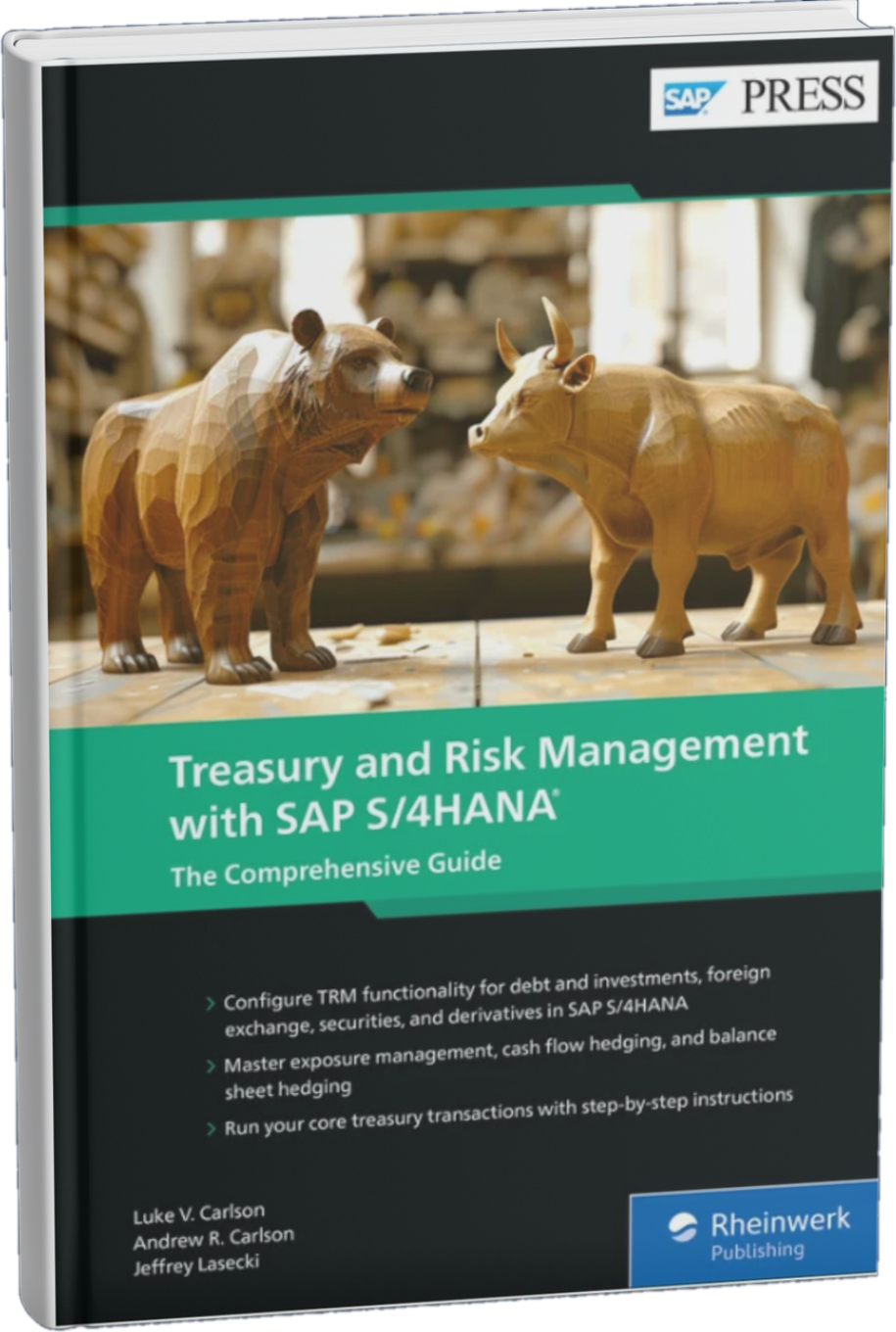
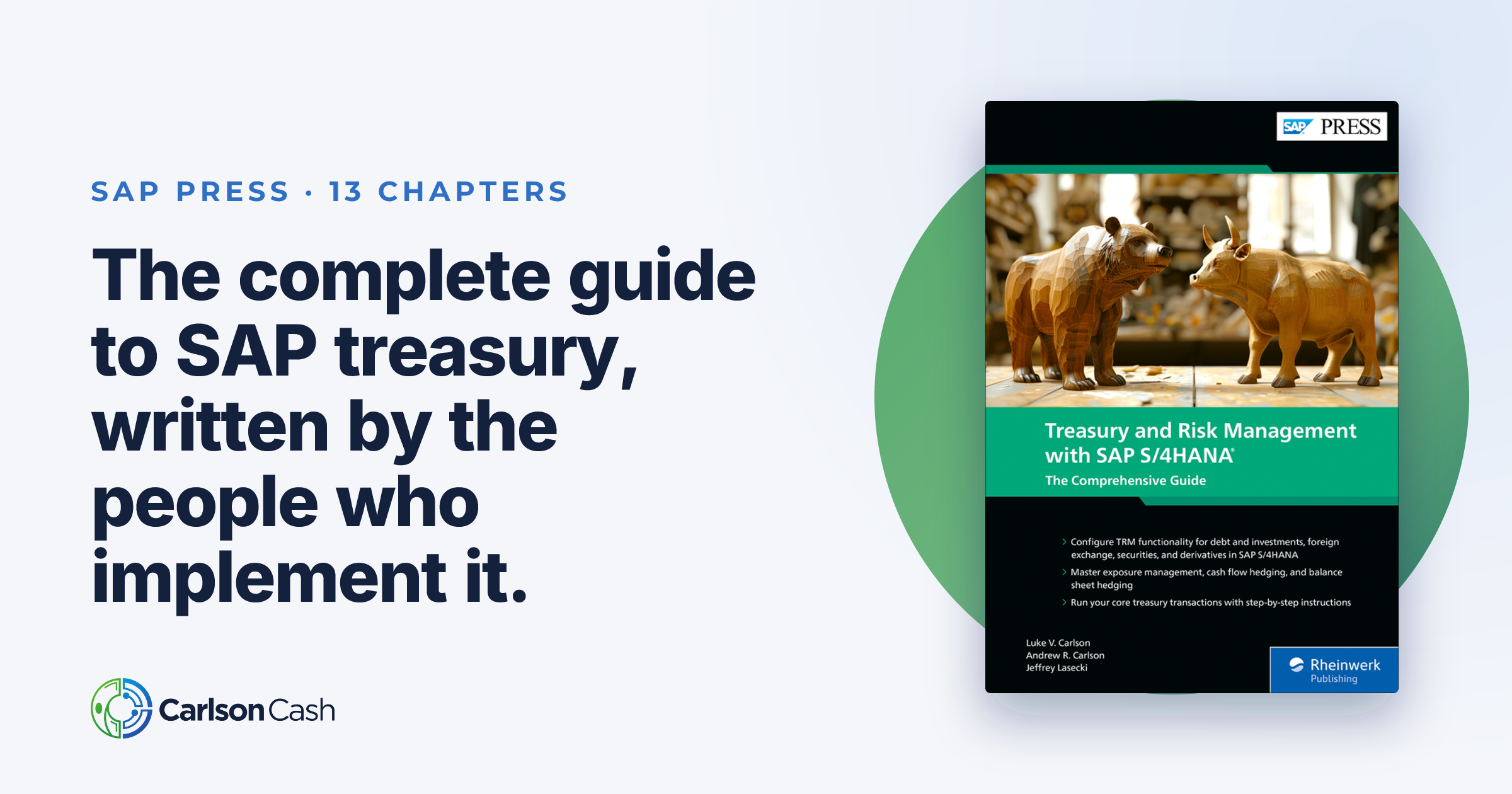
If you want to go deeper into SAP TRM, our book Treasury and Risk Management with SAP S/4HANA: The Comprehensive Guide (SAP PRESS, 2025) covers everything from master data and configuration to hedging, integration and reporting. We’ve also put together a chapter-by-chapter guide to the book, so you can see what’s inside each chapter before you buy it.
Where does your team stand?

Partner, Carlson Cash.
Andrew is a co-author of Treasury and Risk Management with SAP S/4HANA: The Comprehensive Guide (SAP PRESS, 2025).